
The Origins of the Barka Foundation

Barka e.V. traces its roots to the Barka Foundation for Mutual Assistance, founded in 1989 in Poland by psychologists Barbara Sadowska and Tomasz Sadowski. A pivotal moment occurred that year when the Sadowski family, with their young children, moved into an abandoned school in Władysławowo in western Poland to provide shelter for people who had been particularly hard-hit by the political and social transformations of the time.
This gave rise to a community where individuals with mental health conditions, as well as unemployed, homeless, and even formerly incarcerated people, could find a place.
Thus, the foundation for the Polish Barka Foundation and its unique approach was laid. The community in the abandoned school in Władysławowo continues to exist to this day.
The Sadowski family (from left: Jadwiga, Tomasz, Maria, Barbara, Ewa)
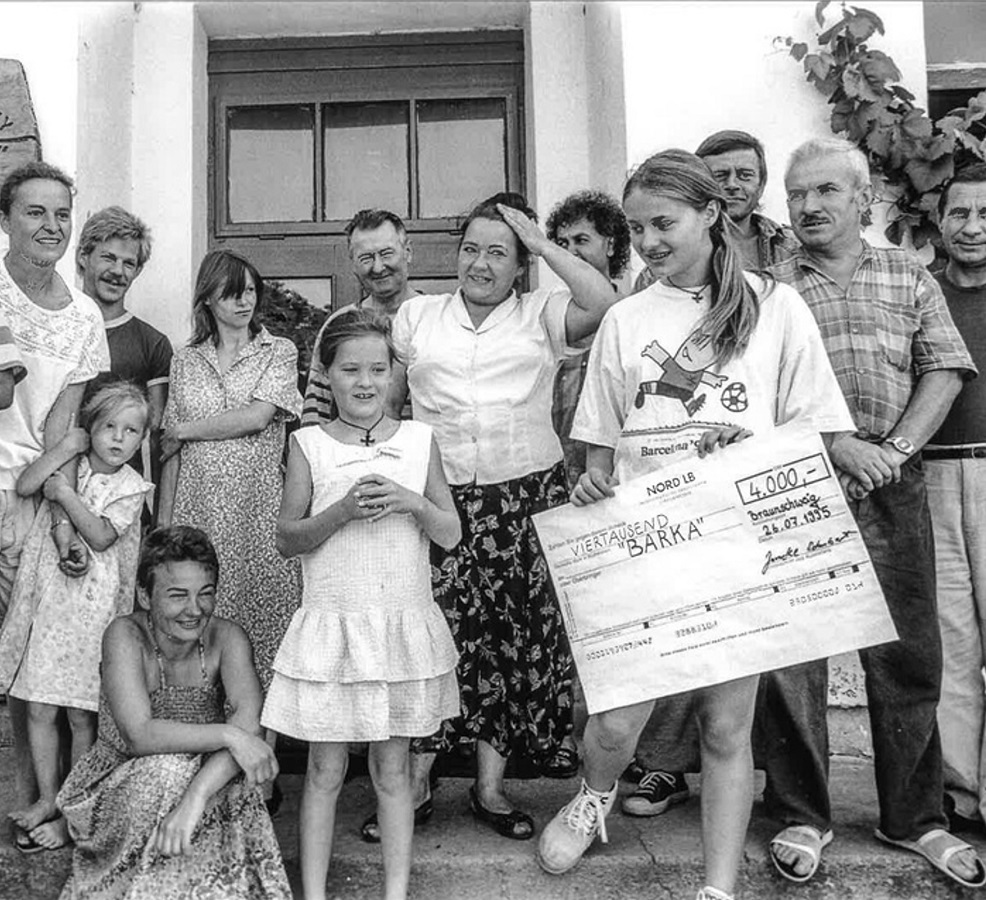
There are currently nine communities – four in the Greater Poland Voivodeship and five in Strzelce Opolskie – led by Barbara Sadowska and her three daughters, alongside so-called “Leaders” (individuals with personal experience of addiction and homelessness).
At the heart of these communities is the principle of mutual support: being supported and supporting others – as reflected in the name “Barka Foundation for Mutual Assistance.” Each community emphasises different areas, such as agriculture or animal husbandry, which serve as structuring elements in daily life.
In addition, there is a Centre for Social Reintegration, which supports the reintegration of Barka residents and people from the Poznań area into the labour market. Barka also contributed to the drafting of legislation on social reintegration in Poland.
Participation in both accommodation and vocational reintegration programmes is, of course, entirely voluntary.
Today, Barka is a global network with projects in nine European countries, as well as in Canada and Africa.
The Founding of Barka e.V.
The idea for Barka e.V. arose from an urgent need: following Poland’s EU accession in 2004, and Romania’s and Bulgaria’s in 2007, increasing numbers of EU citizens came to Germany in search of work and a better life. Many, however, ended up on the streets due to exploitative employment, lack of social protection, and language barriers – without prospects and without support.
Barka responded. As early as 2006, the Polish Barka Foundation was active in London at the invitation of the authorities, providing assistance to homeless Eastern Europeans. With the growing migration within Europe, the demand for support continued to rise.
In 2018, at the invitation of the Polish Embassy, the first pilot project was launched in Berlin, funded by the Senate of the Republic of Poland. The aim was to reach and support homeless Polish citizens in acute crisis situations in Berlin – offering pathways for return, reintegration, or a new life within a supportive community.
The International Barka Network
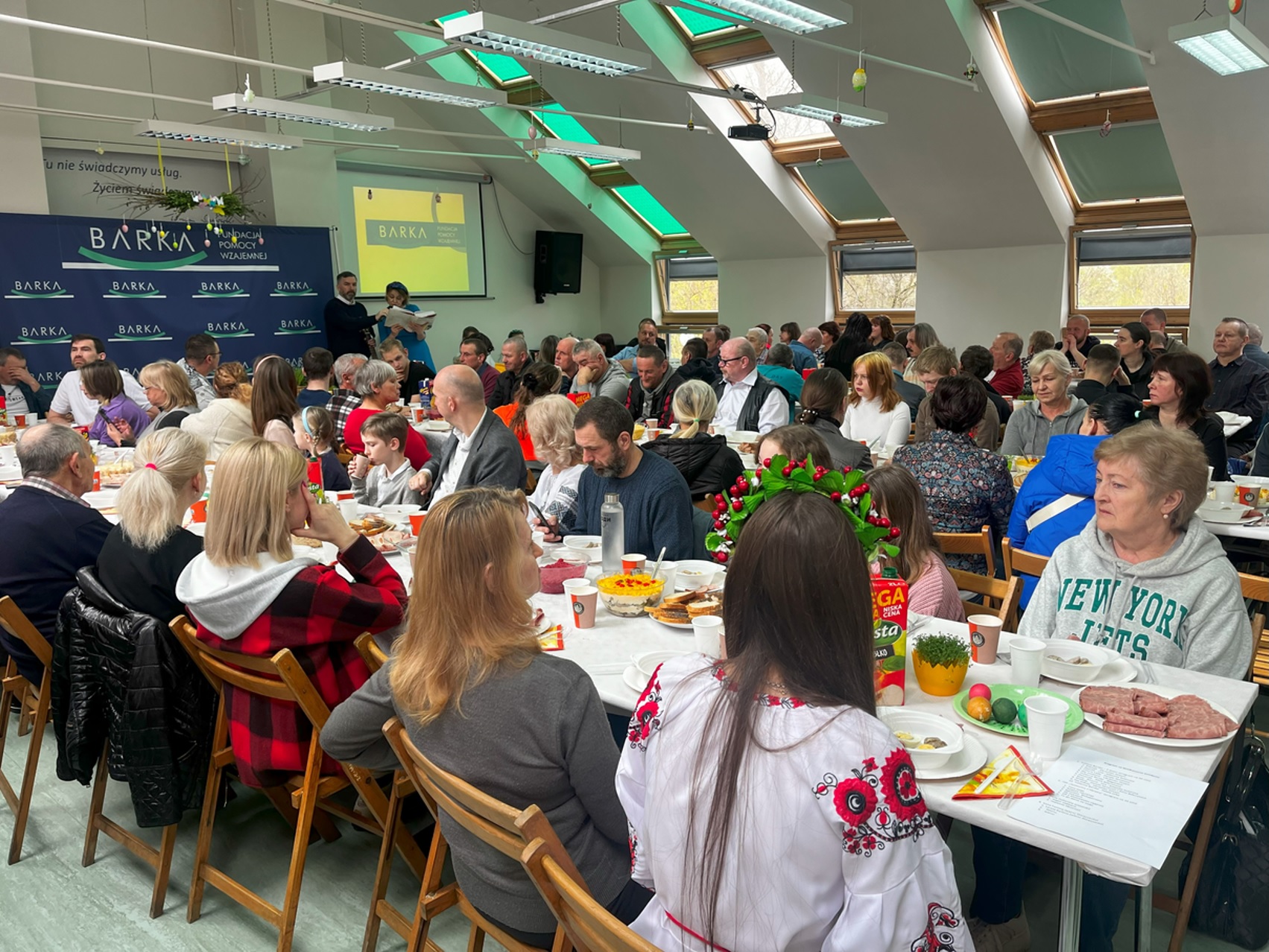
Today, Barka e.V. is part of a Europe-wide network, active in several cities such as Utrecht, Rotterdam, Dublin, and London – providing outreach social work, multilingual teams, and an approach grounded in respect, trust, and lived solidarity. In these countries, Barka has helped over 35,000 migrants to establish themselves in supported housing projects or employment.
The largest Barka location is in the Netherlands, where Barka has been active since 2012. Teams operate in cities such as The Hague and Rotterdam, supported by government authorities. One example is the “Training Flat” project in Utrecht, which offers accommodation and support to homeless individuals. Within a year, 13 out of 15 residents secured both employment and housing.